Visual Framing Project
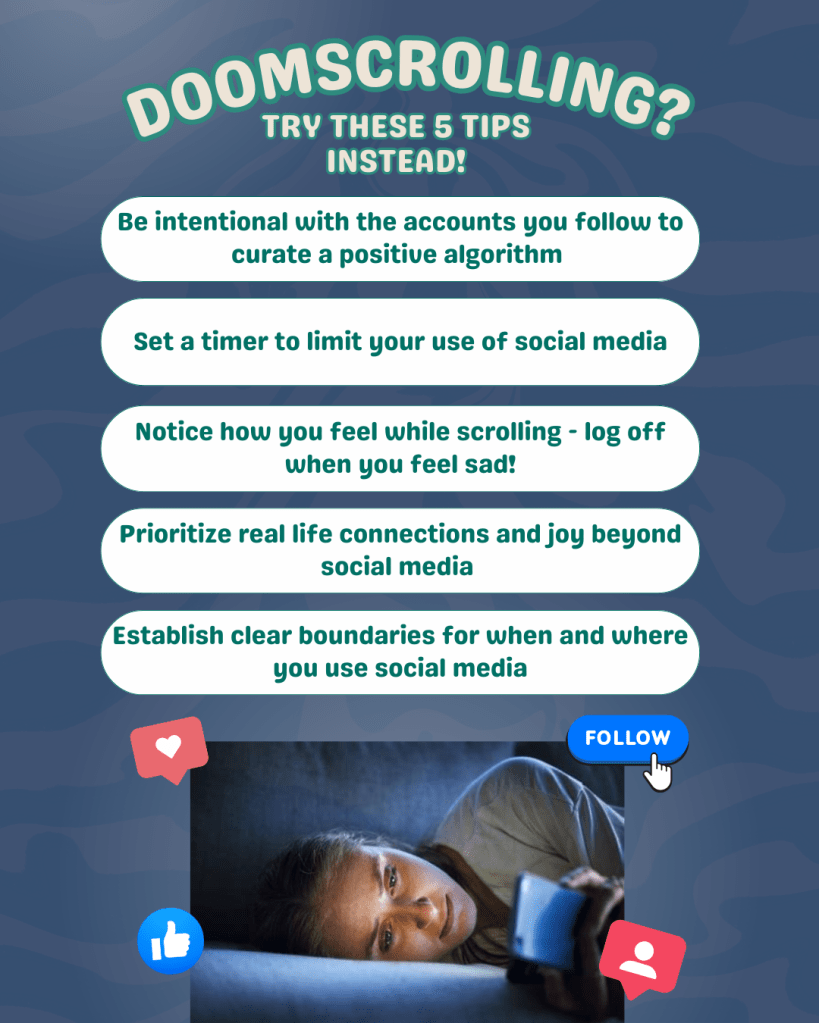
Social media has a way of pulling you in, leaving you scrolling for hours on end. No matter the platform, your feed may look slightly different from someone else’s, but one thing remains the same, looming presence of negative content. This habit, known as doomscrolling, keeps you stuck in this constant cycle of negativity, often leading to increased anxiety, stress, and poor sleep.
I chose Instagram as the platform for this project, aiming to create a graphic that visually frames doomscrolling as a harmful but fixable habit. My goal was to guide viewers toward healthier mental and physical choices through simple, actionable tips. To achieve this, I used visual framing techniques, layering, and strategic color choices to create a design that quickly conveys both the problem and the solution.
I first took note of instagram’s update to the vertical grid layout and selected a template with those dimensions. From there, I knew I wanted to use layering and needed an image that effectively conveyed doomscrolling without being overly distressing. The goal was for the final design to evoke a sense of learning and reflection.
The image of a woman lying on her bed, staring at her phone, established a feeling of isolation and exhaustion, framing doomscrolling as an unhealthy habit. To contrast this, I chose blue – green hues to evoke serenity and align with the mental health theme. Bright white text bubbles, evenly spaced, enhance contrast against the background, ensuring organization and readability. As a final touch, I incorporated social media cues, such as “follow” and “like” buttons, to reinforce the platform’s influence on behavior.
Ultimately, this design not only warns against doomscrolling but also offers an immediate solution. Through framing, layering, and strategic color choices, I created a visual that encourages viewers to recognize their own habits and take small steps towards a healthier relationship with social media. Now that it’s uploaded to my site, anyone who comes across it will take a second to pause and reflect.
Social Media Ads

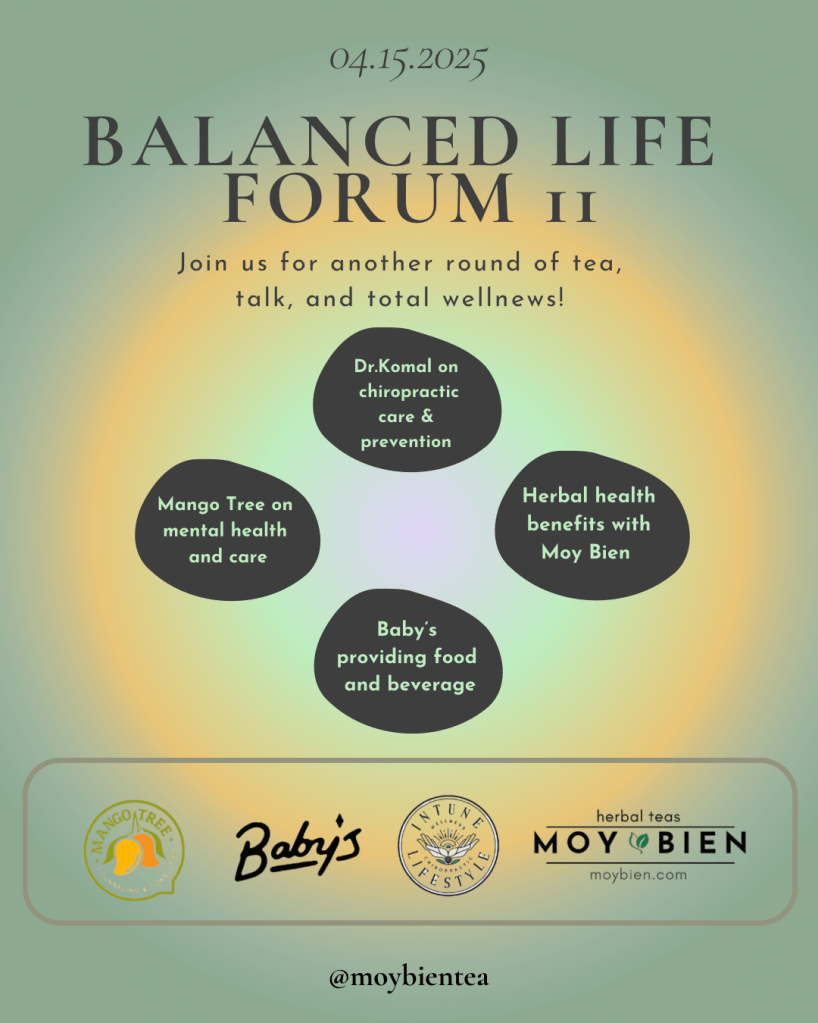
Story Post for a second balanced life forum.
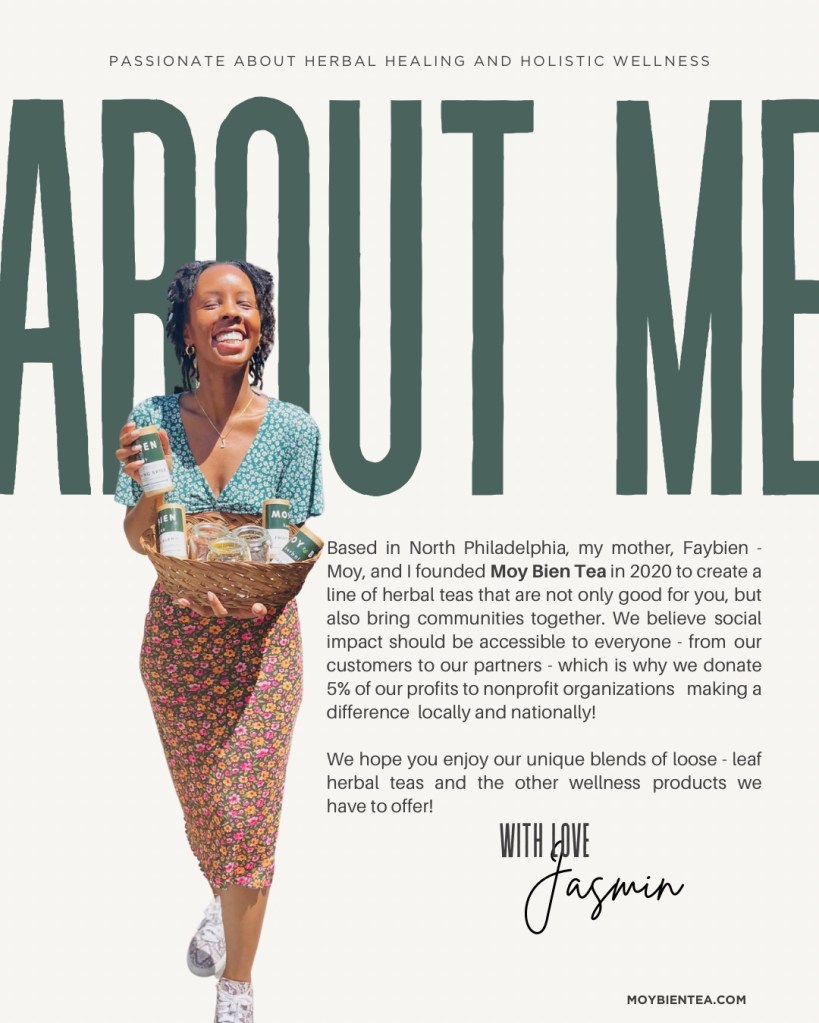
Caption: Meet Jasmin – co-founder of Moy Bien Tea and one half of the vision behind this community-centered, wellness-focused tea brand. 🍵
Say hi below or share your favorite tea blend!🌟#MeetTheMaker#moybienstory
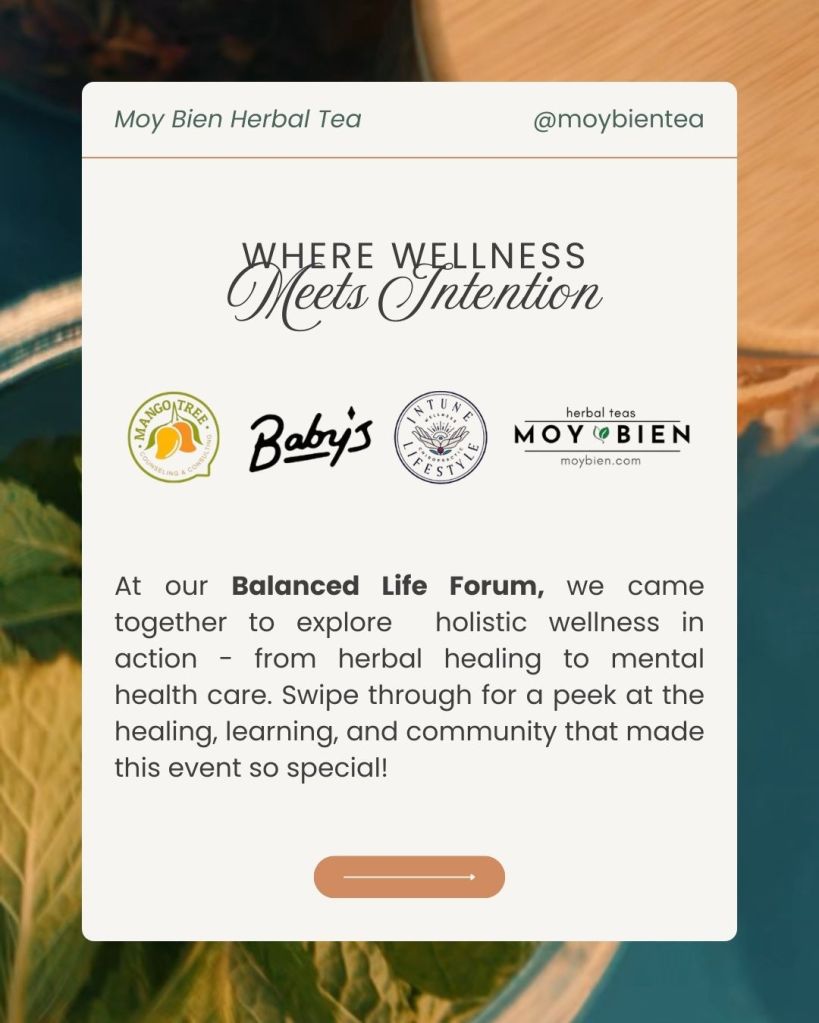
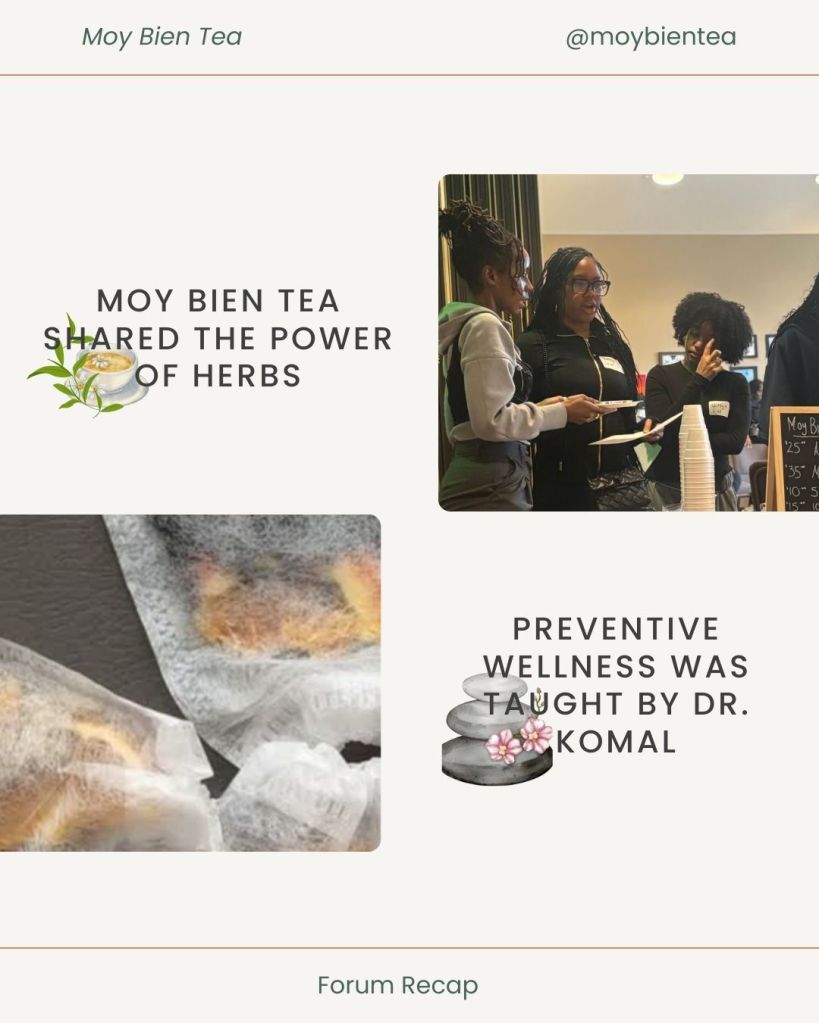
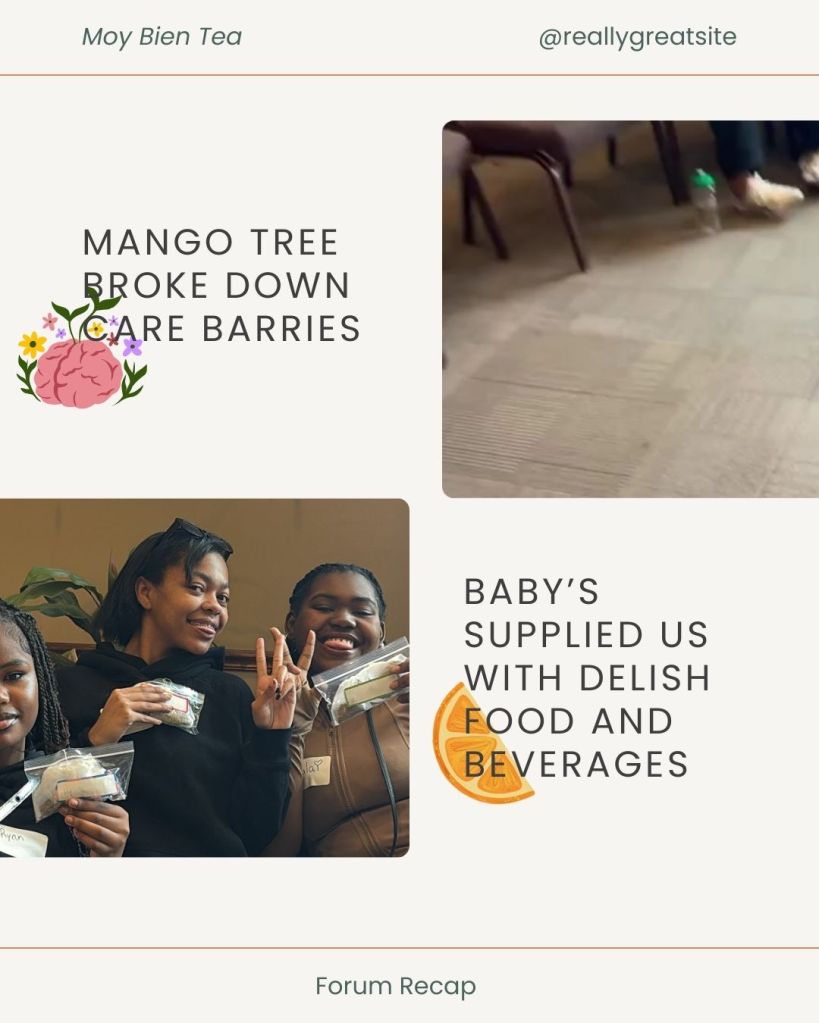

Carousel Instagram Post with caption:
A weekend of wellness, connection, and care 🧘🏼♀️The Balanced Life Forum brought together powerful voices in holistic healing from gut health to mental wellbeing. Swipe to see the magic 🍃#moybienmoments#balancedlifeforum
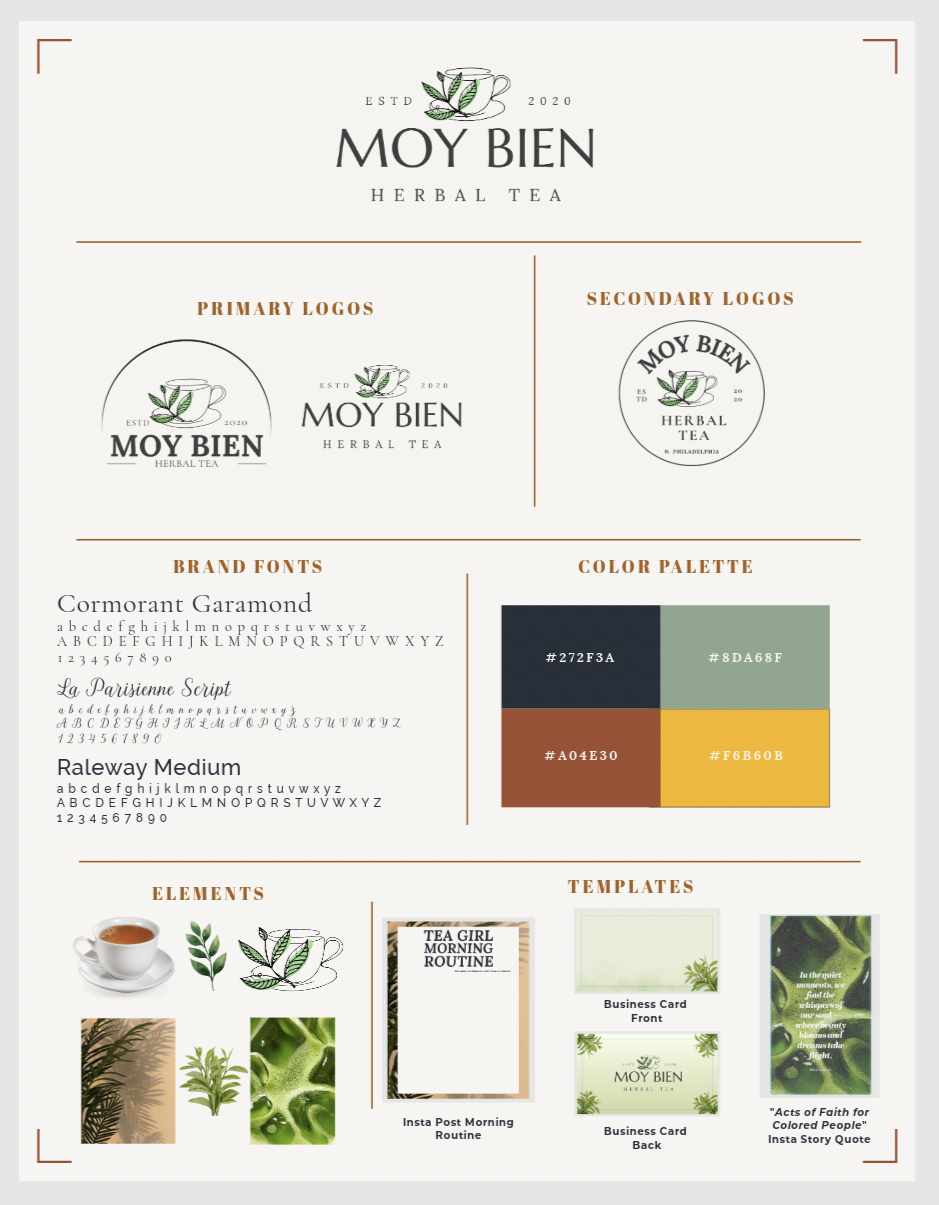
Moy Bien Brand Kit
Infographic
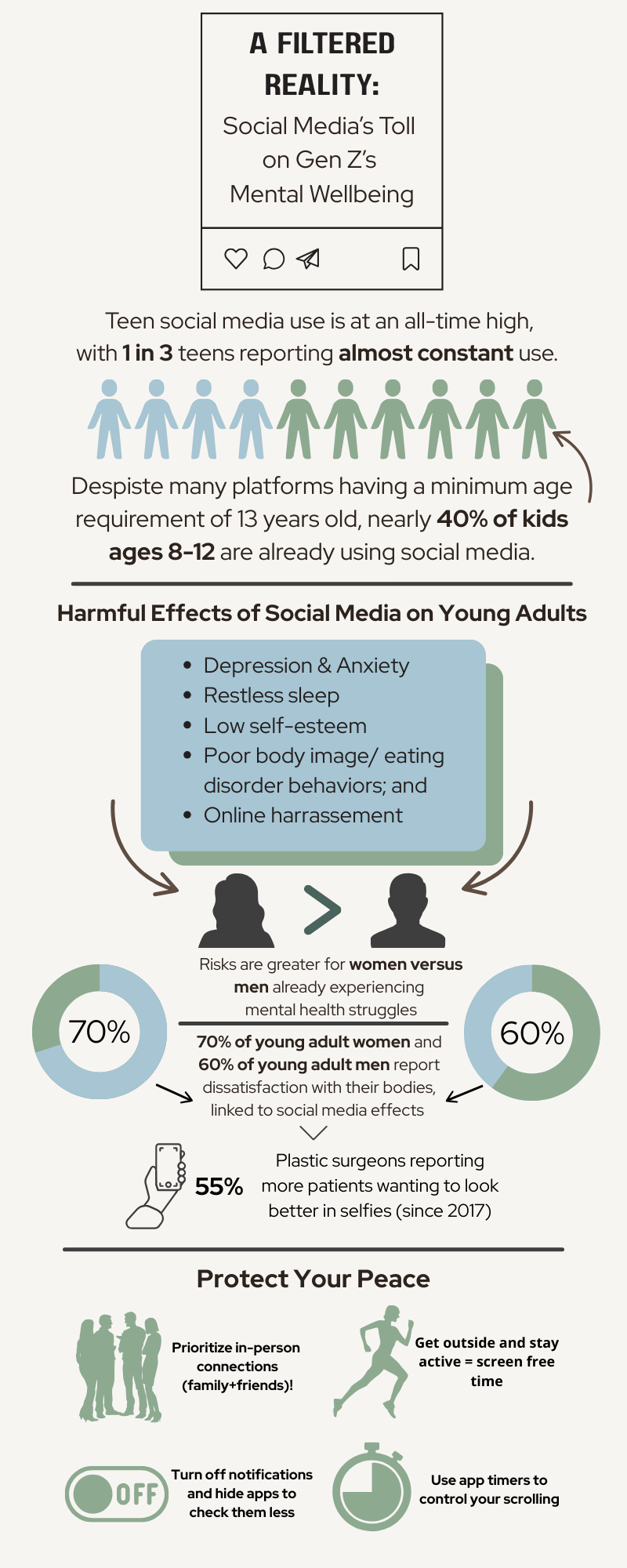
For my infographic, I aimed to create a design that would immediately connect with younger audiences while also resonating with parents, educators, and anyone concerned about the growing societal pressures and mental health challenges linked to social media. My goal through this graphic is to reflect how platforms like Instagram and TikTok contribute to comparison culture and mental health struggles, often starting at an alarmingly young age.
In making design choices, I applied several visual communication principles we discussed in class. I began with the title and decided to frame it inside of a blank, modern Instagram post outline, a direct nod to the environments where comparison culture often takes root. I used visual hierarchy through font size, weight, and color to guide the viewer’s attention, making sure the most important facts stood out clearly. I also applied Gestalt principles by grouping related icons, statistics, and charts together to make the information easier to process. Additionally, I used semiotic cues, like the selfie icon next to the 55% statistic, to quickly communicate meaning without over-explaining.
With an understanding of how Gen Z consumes information, I opted for clean, minimal chart and bar graph icons to make the statistics about youth usage, body dissatisfaction, and comparison culture easy to absorb. My conclusion, the “Protect Your Peace” section, uses friendly, action-based icons to provide balance, turning awareness into tangible solutions.
Ultimately, this infographic is a call to awareness. While a large portion of the population is active on some form of social media, we need to find ways to protect our minds and bodies in the process. I wanted to highlight just how young these issues are starting and how seemingly normal digital habits can create harmful pressure. My goal was to combine relatable visuals, real statistics, and a calming color palette to inform and encourage viewers to reflect on how social media is really affecting us.
Final Project
In today’s digital marketing landscape, audience trust in influencer culture critically depends on visual framing and perceived authenticity. This research integrates four foundational themes: authenticity frameworks distinguishing passionate versus transparent authenticity (Audrezet et al., 2020); grassroots accountability through Reddit snark practices policing influencer missteps (Demsar et al., 2023; Rauchberg & Maddox, 2024); visual storytelling strategies leveraging pop-culture icons and a five-part narrative arc to guide interpretation (Smith et al., 2021; Junior et a;., 2023); and nostalgia-driven authenticity that deepens emotional bonds by tapping bittersweet collective memories (Jiang et al., 2021; Youn & Dodoo, 2021). Case studies like r/LAinfluencersnark and Labubu doll revival show how alignment fosters trust and misalignment triggers scrutiny. I conclude by outlining future research directions, including cross-cultural experiments, longitudinal trust tracking, and the effects of AI – generated influencer content on authenticity perceptions. My finding equip marketers and scholars with actionable frameworks to build and sustain audience trust.
 CZ Approved